Microsoft Patents AI Tech That Rewrites Speech and Edits Lips on Live Streams
A fresh patent filing reveals system concepts that can replace spoken words and sync facial motions on the fly.
By Rae MitchellPublished Updated 2 min read
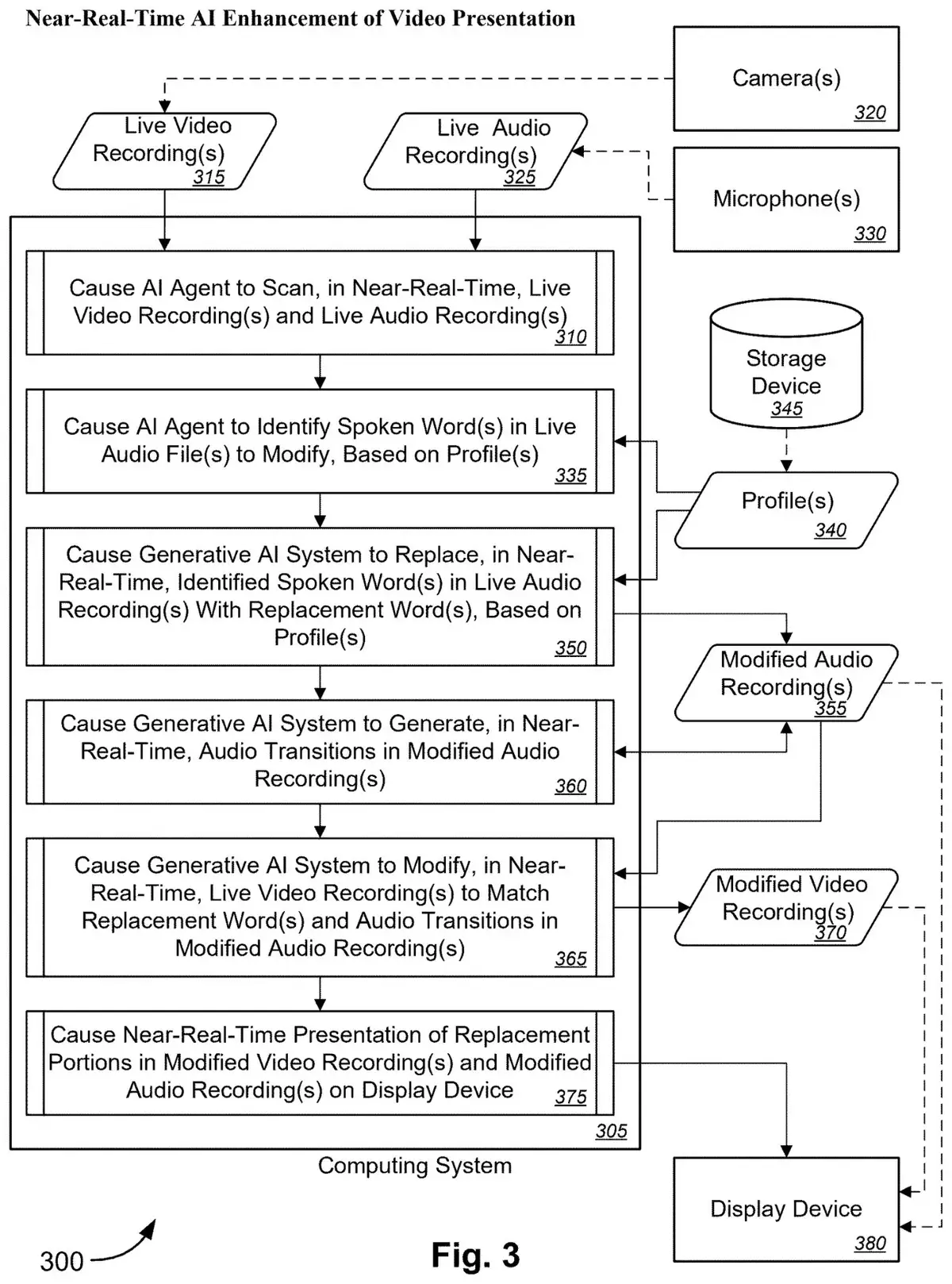
Live broadcasting could be headed for an uncanny transformation. A newly revealed patent application from Microsoft outlines generative technology capable of listening to a broadcaster, substituting the spoken words, and shifting their mouth movements on screen so the visual matches the new dialogue almost instantly. According to the official filing, the proposed system operates in near real time. Instead of relying on traditional post-production editing tools that require recorded video files and extensive rendering windows, this technology targets active streams. The mechanism evaluates the audio track, introduces modified phrasing, and dynamically redraws the speaker’s lips to make the swapped voice track look seamless to viewers watching live.
How does the Microsoft livestream patent work?
Patent documents explain that the system processes incoming audiovisual feeds during an active broadcast. When a change in the spoken message is triggered, artificial intelligence models work concurrently to produce adjusted audio and re-render the lower portion of the subject's face. The system's core appeal lies in its rapid turnaround. Standard video modification workflows demand significant computational time to analyze phonemes, align video frames, and mask artifacts. By streamlining these calculations into an automated pipeline, the architecture described in the filing aims to disguise spoken changes without introducing disruptive latency into the public feed. While patent filings frequently serve as conceptual blueprints rather than guarantees of commercial hardware or consumer software features, the technical framework indicates where major tech firms are directing their artificial intelligence research.

What could real-time lip syncing mean for creators?
For digital creators and online broadcasters, the prospect of on-the-fly speech replacement represents a dramatic technical shift. The underlying concept could offer practical solutions for content moderation, allowing platforms or producers to automatically replace accidental profanity, sensitive data, or background noise with clean alternatives before viewers even register a mistake. Similarly, live translation tools could leverage identical mechanisms. A creator speaking English could theoretically have their broadcast dubbed into dozens of foreign languages simultaneously, with localized video feeds adjusting their lip shapes for each respective international audience. At the same time, the capability raises obvious concerns across the entertainment and online media landscapes. Audiences already struggle with deepfake material and synthesized media across social networks. Deploying automated voice swaps and synchronized facial modifications during live interactions introduces fresh questions about trust and authenticity on camera. For now, the technology remains on paper in patent records, but its existence shows how boundary-pushing generative video development has become.
The photos · 2
More like this

Influencers & TikTok
Rachel Gurjar Welcomes Brooklyn Creatives for Intimate Diwali Feast
The food stylist and author toasted her debut cookbook with mezcalitas and paanch phoran duck.
Nov 5, 2026

Influencers & TikTok
sWooZie Defends AI Project Following Backlash From Animator Ashley Nichols
The veteran YouTuber claims his controversial experiment with artificial intelligence could ultimately finance future hand-drawn animation.
Nov 4, 2026
Influencers & TikTok
EdenTheDoll Speaks Out After Facing Heat for Post-Show Broadway Stage Selfies
The digital creator is speaking out after theater fans called her out for stepping onto the 'Wicked' stage.
Nov 4, 2026
Get the pop news brief
One daily email. The biggest celebrity, music and TV stories, no filler.
People also ask
- What does the new Microsoft patent describe?
- The filing details an artificial intelligence framework that can replace spoken audio on a live broadcast and alter the speaker's lip movements in near real time.
- Is Microsoft launching this AI feature right away?
- No official product release has been announced. Patent applications represent technical concepts and research rather than confirmed consumer software.
- Why would someone alter lips during a livestream?
- The concept could assist with instant multi-language translation, live profanity bleeping, or automatic dialogue correction during broadcasts.
- microsoft
- artificial intelligence
- livestreaming
- deepfake tech
Reader reaction
No comments yet — be the first to weigh in.